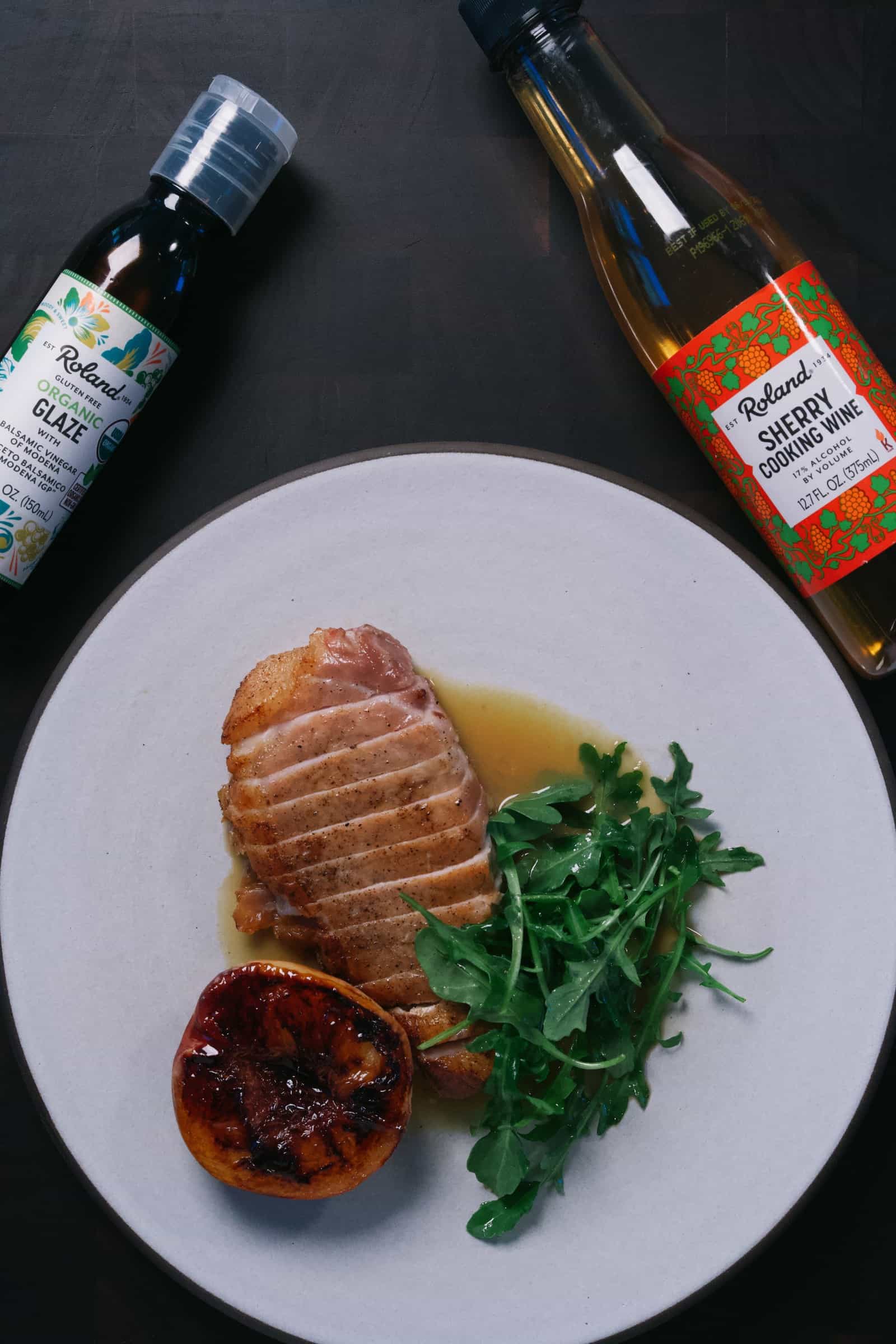
Ingredients
Pork
- 2 bone-in pork rib chops 12 to 14 oz each, 1 ½ inches thick, fat cap left on
- 2 tsp kosher salt
- 1 tsp black pepper freshly cracked
Sherry Pan Sauce
- 1 large shallot thinly sliced
- 2 sprigs fresh thyme
- ¾ cup Roland Sherry Cooking Wine
- 1 cup unsalted chicken stock
- 4 tbsp unsalted butter cold, cubed
Peaches
- 2 freestone peaches ripe, halved and pitted
- 1 tbsp Roland Balsamic Glaze
Arugula
- 3 cups wild arugula loosely packed
- 1 tbsp extra virgin olive oil
To Finish
- flaky salt to taste
Method
Salt the Chops
- Pat the chops dry, then salt them on both faces and along the fat cap. Dry first, because water on the surface dilutes the brine and lets it run off onto the rack instead of getting drawn back in.
- Rack over a sheet pan, uncovered, in the fridge. Four hours is a real floor, not a soft one. Somewhere between one and three hours the surface is wet with brine that has not been taken back in yet, which is the worst possible moment to cook it. Overnight is better. The surface should go matte and slightly tacky, and that dryness is what browns later.
Bring the Pork Up Slowly
- Oven to 250°F. Pepper the chops now. Black pepper loses its smell sitting in dry fridge air for a day, so grind it here and you can smell it from the board.
- Chops on a rack over a sheet pan, into the oven. You are not cooking them, you are walking the whole interior up together so the sear has almost nothing left to do. That is what keeps the pink running to the edge instead of leaving a grey band under the crust.
- Start checking at twenty five minutes. Out at 125°F in the thickest part, away from the bone.
Render the Cap and Sear
- Cast iron over medium-high while the chops finish. No oil. The chops bring their own.
- Stand the chops on their fat caps, leaning them against each other so they hold. This is the step the whole dish is built on. The cap renders straight down into the pan, so you finish it with a crisp edge instead of a soft one, and the pan finishes it with the fat you are about to cook everything else in. Two to three minutes, until the cap is deep gold and the pan has a shallow slick in it.
- Lay them flat. Leave the first side alone until it releases on its own, about thirty seconds. If it sticks, the crust is not ready, so do not force it.
- Once it lets go, keep turning them, every twenty or thirty seconds, for about ninety seconds total. They are already at temperature, so this is a crust and not a cook, and turning this often stops either face building a steep gradient while the other one waits. The crust comes out the same as leaving them alone, as long as the surface is dry, and the dry brine handled that yesterday.
- Pull at 138 to 140°F. Rest on a rimmed board about ten minutes, until the juices stop moving. Whatever pools there goes into the sauce at the end. Carry-over takes it to 145 and the rest does the rest of the work. Trust it.
- Pour off all but about two tablespoons of the fat. Keep it, it is the best thing in your fridge this week.
Build the Pan Sauce
- Everything stuck to the bottom of that pan is the sauce. Shallot into the pork fat over medium. You are not browning it, just taking the raw edge off. Thyme in.
- Sherry cooking wine in, and scrape. This is where the wine earns its place: alcohol dissolves aroma that water leaves stuck to the metal, so the pan gives up everything it has been holding.
- Reduce until it is syrupy and still visibly wet, two or three tablespoons, and the sharp alcohol smell has gone. Stop there. Water is the only thing keeping this pan at boiling temperature, and the second it is gone the sugar and the salt in that wine are sitting on hot iron.
- Chicken stock in. Reduce to about two thirds of a cup and no further. This wine came salted and salt does not evaporate, so how far you take it is how salty it lands.
- Fish the thyme out. Cold butter off the heat, one cube at a time. You are building an emulsion and it wants to be warm, not hot and not cool. Glossy, coating a spoon without running. That is the line.
- The juices from the resting board go in last. Then taste. Too salty means a splash of hot water and one more cube of butter, and that is the only fix you get once the butter is in. It will almost never need salt.
- Into a warmed jug. It will hold the five minutes the peaches need.
Lacquer the Peaches
- Peaches go last, in the same pan, while the meat is still resting. They need three minutes and no rest of their own, so cooking them earlier only means serving them cold.
- Twist the pit out. If it does not come free clean, that peach is not ready to be halved and you want a different one.
- Wipe the pan, a film of the reserved pork fat, medium-high. Peaches cut side down. A flat pan puts the whole cut face on the heat at once, which is why this works on fruit soft enough to be worth eating. Do not move them.
- Two to three minutes, until the cut face is deeply marked and smells like it is caramelizing rather than cooking.
- Pan off the heat. Brush the balsamic glaze over the cut faces and leave them thirty seconds. The glaze is already a syrup and mostly sugar, so on live heat it scorches and turns bitter, but on the pan's falling heat it tightens onto the fruit and stops being a sauce sitting on a peach.
Dress the Arugula
- Last thing, after the peaches are off. Olive oil and a pinch of salt, tossed with your hands. Dressed leaves start collapsing the moment they are wet, so this cannot be done ahead the way a tomato can.
- Taste one leaf. You want it slick, not wet. There is no lemon in it on purpose, because the sauce and the glaze are already carrying the acid on this plate. What the leaves are here for is pepper and a little bitterness against all that fat.
To Plate
- Chops onto a board, whole, on the bone.
- Peaches alongside, cut side up.
- Arugula in a loose pile alongside, or in its own bowl. Flaky salt.
- Sauce in the jug. Everyone helps themselves.
Notes
For seasoning, I always use Diamond Crystal kosher salt. If you use Morton, use half.
The dry brine is inactive time and is not counted in prep or cook.
Roland Sherry Cooking Wine is salted, 180mg of sodium per 2 tablespoons, so ¾ cup carries a little under a teaspoon of kosher salt into the pan. Salt does not evaporate, so how far the sauce is reduced sets how salty it lands. Use unsalted stock rather than low sodium and expect the sauce to need no salt at all.
A freestone peach halves cleanly and a clingstone does not. If the pit does not twist free, choose another peach.