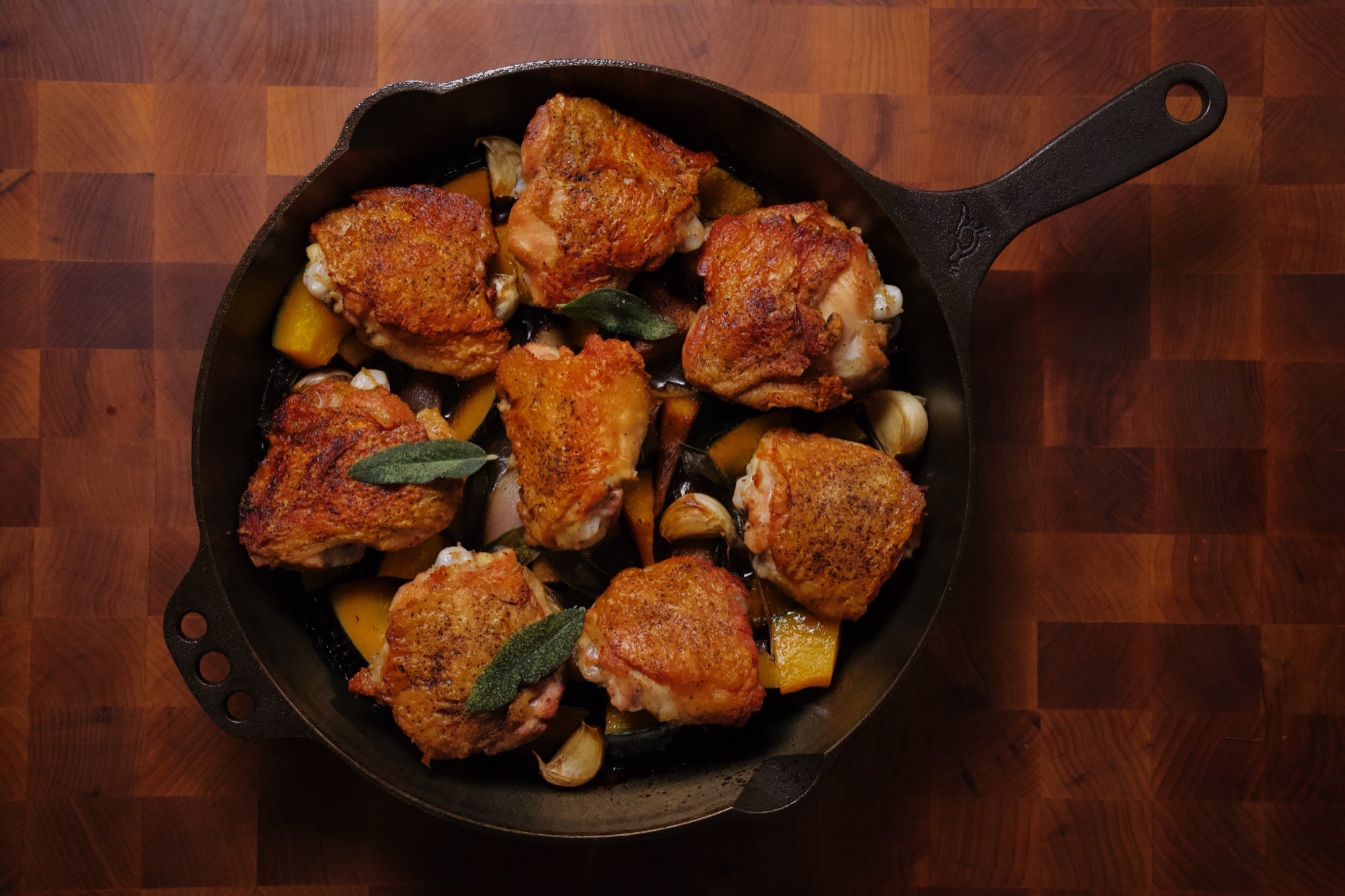
Ingredients
Chicken
- 8 bone-in, skin-on chicken thighs about 3.5 lb total
- 3 ½ tsp Diamond Crystal kosher salt for the thighs
- 1 tbsp avocado oil
- black pepper freshly ground, to taste
Vegetables
- 1 small kabocha squash about 2 lb, seeded, cut into wedges 1 to 1 ¼ inches thick, skin on
- 3 shallots halved through the root
- 1 head garlic cloves separated, in their skins
- 12 leaves fresh sage whole, plus 4 sprigs
- 1 tsp Diamond Crystal kosher salt
- 1 ½ cups chicken stock
To Finish
- flaky salt to taste
Method
Salt the Thighs
- Pat the thighs dry and salt them all over. Lay them on a rack, uncovered, in the fridge for at least 1 hour, overnight if you can. The skin should look dry, not wet.
Sear the Thighs
- Heat the oven to 425°F with a rack in the middle. The glass lid never goes in.
- Set the skillet over medium heat. Once hot, add the oil and wait until the oil gives off its first wisp.
- Pepper the thighs and lay them in skin-down, touching but not overlapping. Leave them alone. The sizzle is loud, then steady, the fat pools clear, the skin goes deep golden and a thigh slides when you nudge it. If it sticks, it is not ready. About 12 to 15 minutes. Do not flip.
- Move the thighs to a rack or board, skin up, with nothing on top of them. Leave about 3 tablespoons of fat in the pan and pour the rest into a heatproof cup.
- Pat the sage leaves dry. Fry one leaf to test, 10 to 20 seconds, then fry the rest in two batches. The bubbling quiets and the leaves go crisp and dark green. Lift them onto a towel and salt them. Fish out any black specks.
Cook the Kabocha Under the Lid
- Lay the kabocha in cut side down, in one layer. Tuck in the shallots and garlic and season with the 1 teaspoon of salt. They sizzle on landing. Give them 3 to 4 minutes until the undersides start to brown.
- Pour the stock around the edge and tuck in the sage sprigs. Cover with the glass lid and turn the heat to medium-low. The liquid should settle to a soft, steady bubble. If it boils, turn it down.
- After about 10 to 12 minutes, lift the lid and test with a knife tip in the thickest piece of kabocha. It should go in with a little push. If there is more resistance, let it roll for another couple minutes and check again. If the pan goes quiet and dry first, add ¼ cup of stock around the edge.
Bake
- Set the thighs back on top, skin up, clear of the liquid. Pour any juices from the rack around the edge, not over the skin.
- Bake uncovered, about 12-15 minutes. A bit of liquid is left in the pan as a pan sauce, and the skin is mahogany and crackles when you tap it with a spoon. The kabocha gives to a knife with no push and still holds its edge. The thickest thigh, away from the bone, reads 180°F or more. If the skin darkens before that, drop the rack a level. At about 12 minutes, test the thickest wedge: if the thighs read 180°F and the kabocha still pushes back, lift the thighs onto a cooling rack set over a baking sheet and give the kabocha 5 more minutes alone.
- The handle is as hot as the oven. Use two mitts and both hands. Hang a dry towel over the handle to remind you (trust me: I've burned myself too many times) and set the skillet on a trivet.
Serve
- Rest it in the pan, uncovered, about 10 minutes.
- Squeeze the soft garlic cloves into the pan sauce.
- Scatter the sage leaves and flaky salt over the top. Serve straight from the skillet.
Notes
For seasoning, I always use Diamond Crystal kosher salt. If you use Morton, use half.
The lid goes over the kabocha only. Under it the thighs would steam and the skin would go soft.