Go Back
+ servings

Two-Ingredient Passata Sauce

No ratings yet
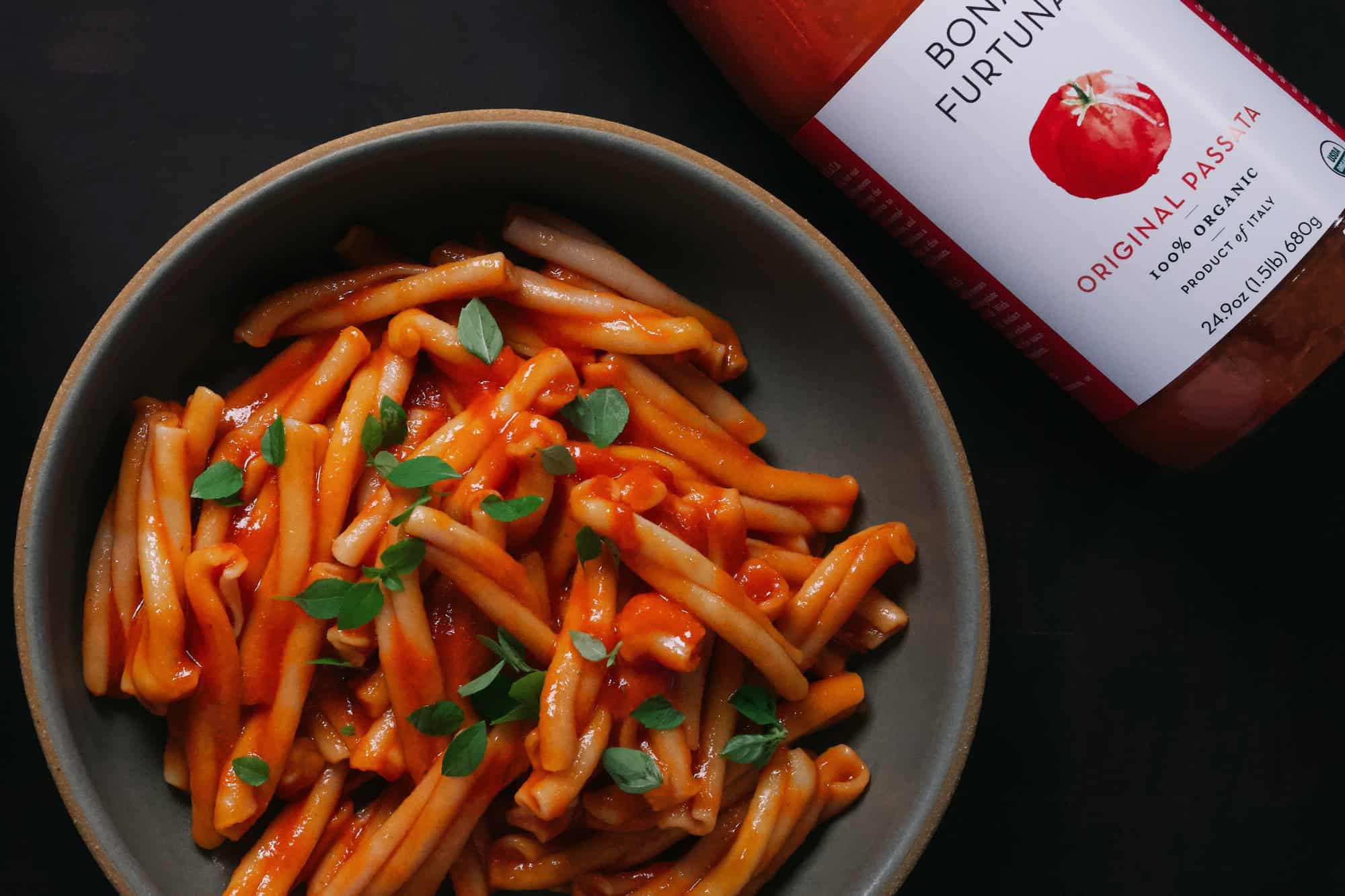
Passata and olive oil, reduced hard and fast until the fat emulsifies into the tomato. Fifteen minutes for a sauce with the body of something that simmered all afternoon.
Prep Time 5 minutes
Cook Time 15 minutes
Total Time 20 minutes
Servings: 4 servings
Course: Main Course, sauce
Cuisine: Italian, Sicilian

Ingredients
  

For the Sauce
  • 1 jar (24 oz) Bona Furtuna Original Passata Sauce
  • cup Bona Furtuna Everyday Olive Oil
  • kosher salt to taste
To Serve
  • 8 oz Bona Furtuna Casarecce
  • 1 small handful basil torn
  • 1 tablespoon Bona Furtuna Everyday Olive Oil to finish

Equipment

  • wide saute pan or skillet
  • Large pot for pasta
  • Wooden Spoon
  • tongs or spider

Method
 

Heat the Oil
  1. Cold pan, all the oil, medium heat. It is more oil than looks right in an empty pan, and that is the point. This is not a slick to stop things sticking, it is half the finished sauce. Warm it until it loosens and thins and you can smell it, green and a little peppery. The smell is the signal. Push it past that and you cook the flavor out of the one ingredient you came here for.
Add the Passata
  1. All at once, and stand back. Cold tomato hitting hot oil will spit. Listen for a hard continuous sizzle rather than a polite one. That noise is water leaving the pan, and water leaving is the entire recipe.
  2. Salt now, not at the end. Salt early pulls water out of the tomato so it can go. A sauce salted at the end tastes like tomato with salt on it. A sauce salted at the start tastes seasoned all the way through.
Reduce and Emulsify
  1. Keep the heat high enough that it never stops bubbling. Stir often and watch the color move from bright red to a deeper brick as the water goes and the sugar concentrates. Smell is your second read. Raw tomato is sharp and slightly green, cooked tomato turns round and sweet. When the sharpness is gone you are close.
  2. Now the finish, and you cannot miss it once you know it. Early on the oil sits in orange pools on the surface. Then it stops separating. Drag a spoon through the middle of the pan and watch the track. If it fills in instantly the sauce is still water. When the track holds for a beat before it closes, the oil has gone into the tomato and you are done.
  3. That is an emulsion, and it is the same thing that happens when you mount a pan sauce with cold butter. The fat here is the olive oil, and it is doing the job that an hour of simmering would otherwise have to do. This is why two ingredients can taste like a Sunday.
  4. Taste. Adjust salt. Nothing else goes in.
Cook the Pasta
  1. Salt the water until it tastes like something. Start it when the passata goes in, and the two will finish together.
  2. Pull the pasta a minute before the box says. It is going to finish in the sauce, and a noodle that arrives already cooked has nothing left to give.
To Plate
  1. Move the drained pasta straight into the pan with a spoonful of its cooking water.
  2. Toss hard for thirty seconds. The starch in that water is what makes the sauce grip the noodle instead of sliding off it.
  3. Tear the basil over the top, and do it at the last second. The clock starts the moment a leaf is opened, so basil torn early and left waiting on the board is already going dark by the time it reaches the plate.
  4. Finish with a last drizzle of the Everyday and serve immediately.

Notes

Tips and Tricks
  • Use the whole third of a cup of oil. Cutting it is the single most common way this sauce ends up thin, because there is not enough fat present to emulsify.
  • Keep the heat honest. A gentle simmer gets you there eventually but the sauce goes dull and stewed on the way. You want it bubbling hard the whole time.
  • A wide pan beats a deep one. More surface area means water leaves faster, which means less time on the heat and a brighter finished sauce.
  • If it tightens past where you want it, a splash of pasta water brings it straight back.
  • Passata, not crushed or diced. Passata is already strained and smooth, which is why the emulsion holds instead of breaking around pieces of tomato.
Variations
  • A whole peeled garlic clove dropped into the oil while it warms, then pulled before the passata goes in.
  • A pinch of chili in the oil at the start for a background heat.
  • Torn mozzarella off the heat at the end so it stays in soft pieces.
Substitutions
  • Basil to flat leaf parsley, or nothing at all. The sauce does not need it.
  • Pasta to grilled bread, a spoon under roasted fish, or the base of a summer shakshuka.
Best Served With
  • Grilled bread good enough to be worth the leftover sauce in the pan.
  • A cold glass of Nero d'Avola or a dry Sicilian white.
How to Store Leftovers
Cool completely and refrigerate in an airtight container up to 5 days. It reheats better than most sauces because the emulsion is stable. Warm gently and stir. Freezes well for up to 3 months.

Tried this recipe?

Let us know how it was!